Overview
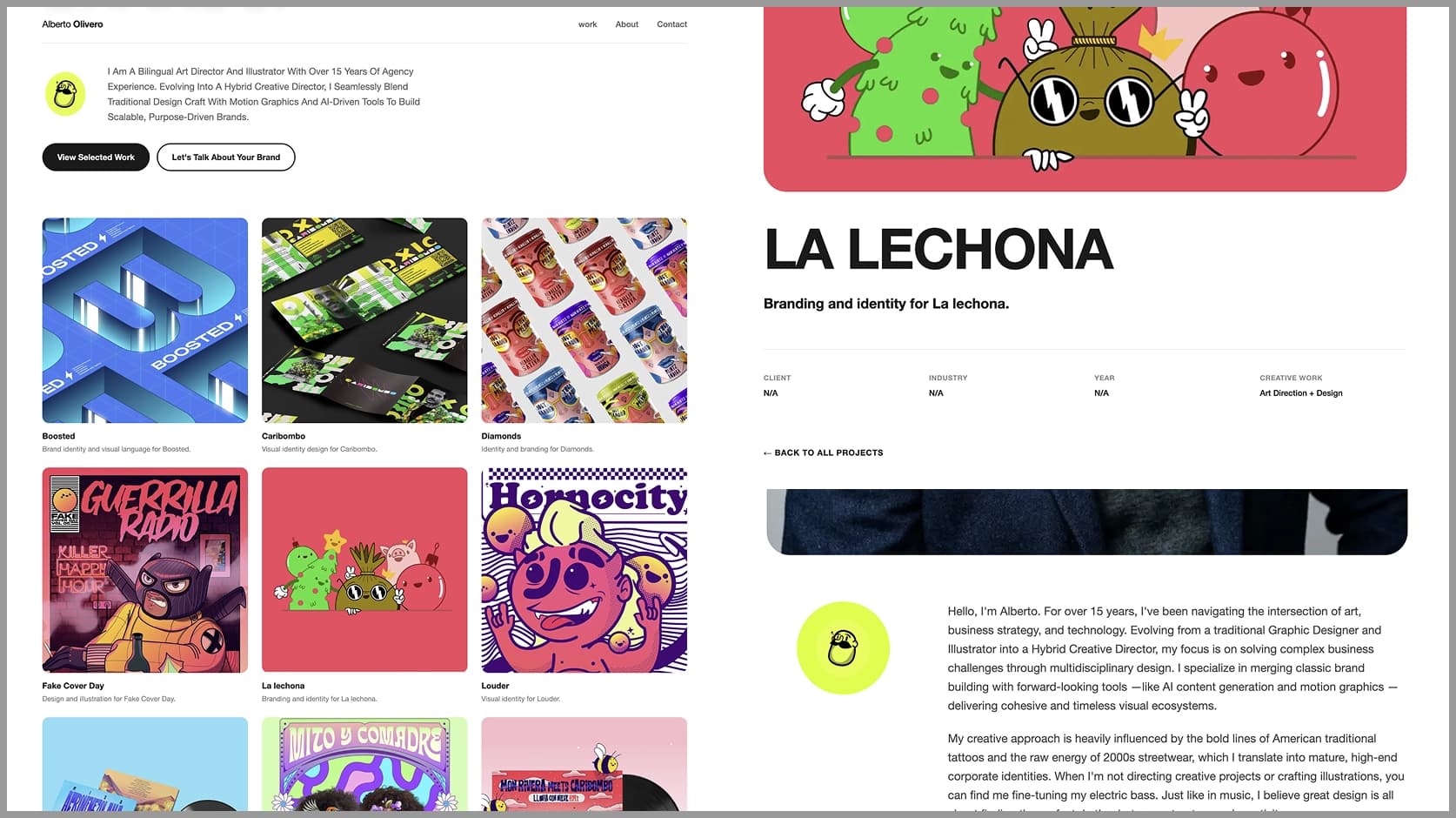
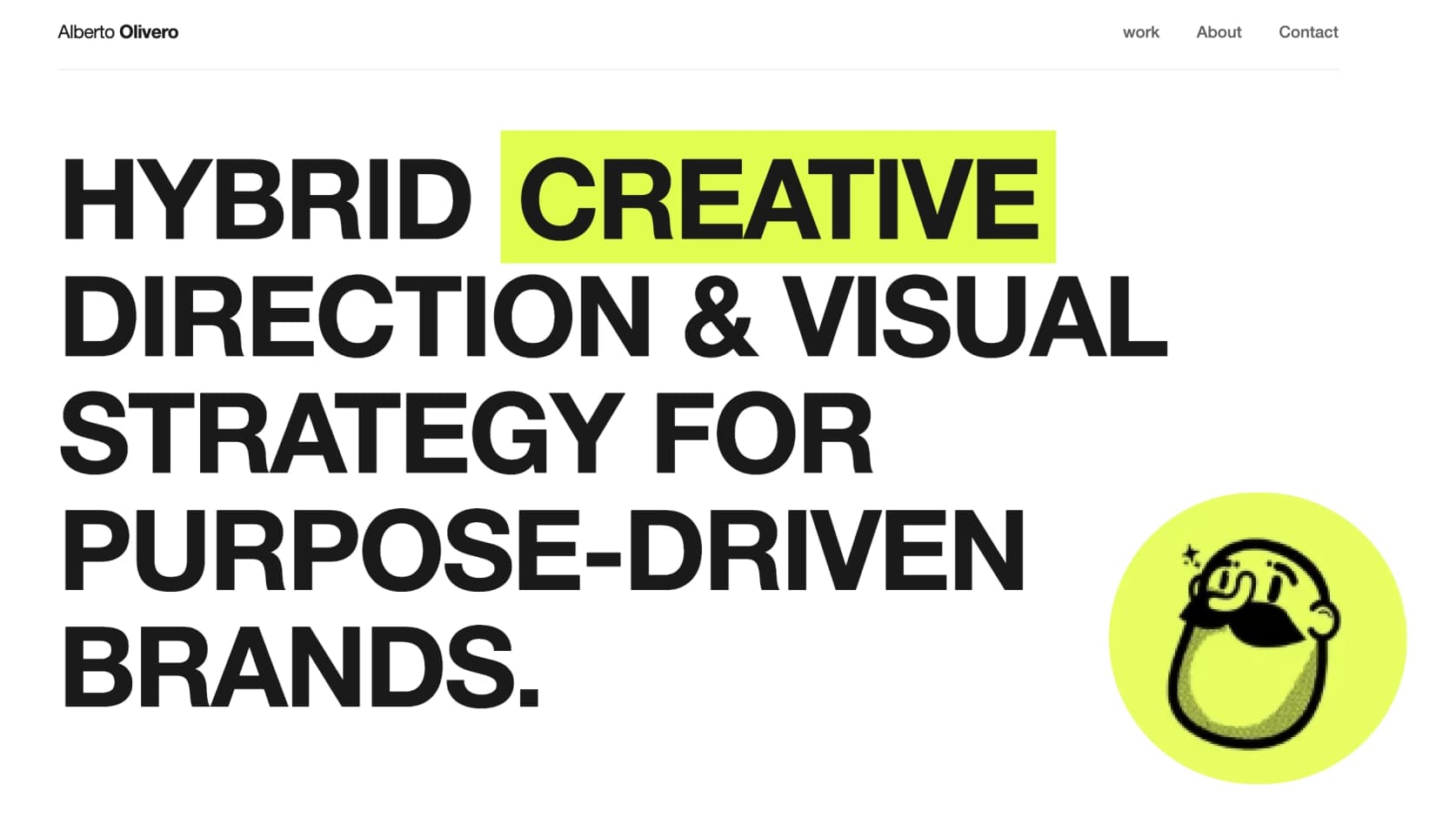
Alberto Olivero is an independent graphic designer working across branding, gig posters, and identity design. I built his portfolio site from scratch in Next.js — a home grid, about page, and a case-study system to present each project (Boosted, Caribombo, Diamonds, and others) individually — then came back later to migrate its tooling and audit it for performance and code quality.
Business Context
As a friend and independent developer, I took this on as a personal project: a working portfolio site Alberto could point people to. I started from the same site architecture I use for my own portfolio — home grid, about page, a case-study system with a detail template per project, and contact — reused as a starting template and adapted to his content instead of built from zero, so each design project gets its own page instead of a flat image gallery.
Challenge
Beyond the initial build, the codebase had inherited two real problems. First, a content-rendering path built around next-mdx-remote — carried over from the same MDX-based case-study pattern my own portfolio still uses — was pinned to a version flagged under CVE-2026-0969. Second, unlike my own portfolio, this build's case-study pages ended up rendering entirely from a plain TypeScript data file instead of live MDX, which meant the vulnerable dependency, its supporting libraries, and the components built around them were shipping unused — the same starting template, but a divergent implementation nobody had gone back to reconcile.
Solution
I built the site's core structure first: a home page with a project grid, an about page, and a case-study detail template driven by a central src/data/projects.ts file rather than individual MDX documents, plus the header, footer, and thumbnail/asset work needed to get real projects on the site. Along the way I patched the flagged next-mdx-remote dependency to v6 to close the CVE.
Later, migrating the project from npm to pnpm turned into more than a tooling swap. pnpm's strict, non-hoisted linking immediately surfaced a TypeScript error — Cannot find module 'mdx/types' — that npm's flat node_modules hoisting had been silently masking. Tracing that error confirmed the MDX rendering path was genuinely unused, so I removed it outright: the unused MDX loader and components, an orphaned example case-study file, and five dependencies that existed only to support that dead path — 146 fewer packages in the dependency tree, with pnpm run build and pnpm run lint passing clean afterward.
I then ran a full performance and code-quality audit against the live codebase. It surfaced a specific, prioritized list: multiple project images shipping as 700KB–2.2MB PNGs with no next/image sizes prop and no priority hint on the largest above-the-fold image; duplicated inline SVG icon markup between the home and about pages instead of a shared component; a usePathname() hook called separately per nav link instead of resolved once; project image filenames containing spaces; one project entry still carrying placeholder Lorem ipsum copy and images borrowed from other projects; and a missing metadataBase in the root layout. Those findings are documented and prioritized but not yet implemented against this codebase.
Outcome
The portfolio runs on a clean, correctly-scoped dependency tree: no vulnerable package versions, no dead rendering path, and a migration that validated the cleanup by catching a hidden type-resolution bug npm had been hiding. The performance and code-quality audit turned up a concrete, ready-to-execute punch list rather than vague advice — the next pass on this project is implementation, not further discovery.
My Contributions
- Built the site from scratch: home project grid, about page, and a case-study detail template driven by a central data file
- Patched a CVE-flagged
next-mdx-remotedependency to the fixed version - Migrated the project from npm to pnpm, which surfaced a real hidden TypeScript module-resolution error masked by npm's flat dependency hoisting
- Diagnosed that error back to an entirely unused MDX rendering path and removed it — components, loader, an orphaned example file, and five now-unnecessary dependencies (146 fewer packages)
- Verified
pnpm run buildandpnpm run lintpass clean after the cleanup - Ran a full performance and code-quality audit, producing a prioritized, specific list of open findings (image optimization,
next/imageprops, component duplication, file-naming hygiene, placeholder content, missing SEO metadata)
Technologies
- Framework: Next.js 16, React 19
- Styling: Tailwind CSS 4
- Language: TypeScript
- Package Manager: pnpm
- Tools: Git, GitHub, ESLint